Invisible leash of AirPods
For a long time, enjoying music was a luxury restricted by physical space and expensive gear. However, technological advancements sparked a massive democratization of music. The turning point was the Sony Walkman. It completely broke physical boundaries, making music both portable and entirely private. Apple later inherited this heritage, taking portable audio to new heights. Undeniably, this democratization brought positive changes. It gave people the ability to create a personal sanctuary right in the middle of a crowded public space.
Yet, the ultimate evolution into wireless technology has brought unexpected consequences. Today, devices like AirPods act as an invisible leash. Rather than offering true freedom, they foster subtle social disconnection and force a strict dependency on a closed corporate ecosystem.
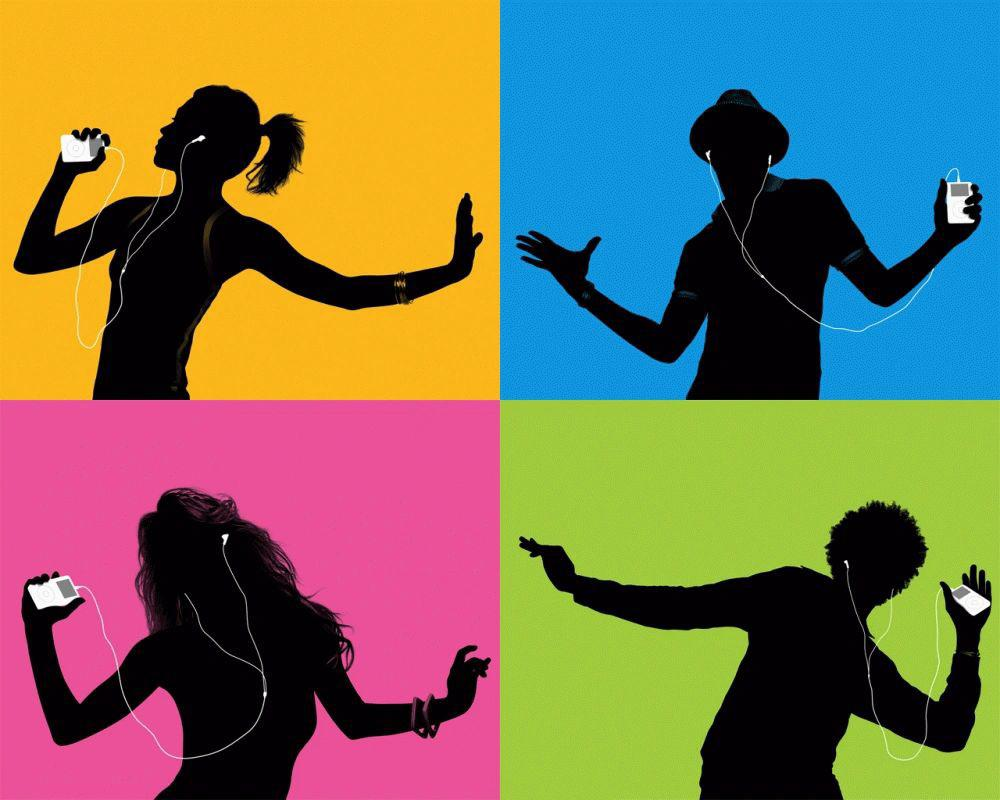
To understand how we fell into this wireless trap, we must first look back at the visible wire we lost. Apple built upon the Walkman's heritage of portable privacy. Their iconic 2003 iPod "silhouette" ad campaign visualized this concept. The commercial featured dark silhouettes dancing against a bright neon-colored background, connected only by a distinct white wire. That wire was more than just a cord; it was a visual border, proudly declaring to the world: "I am in a public space, but I am in my own private zone. And I’m fully enjoying it."
Then came the AirPods. Apple highlighted this new era with a famous commercial showing a man dancing down city streets, defying gravity and walking on walls. They sold it as the evolution of freedom—no tangled cords to hold you back, just a seamless, magical connection to your music. This pure white plastic gives us some sort of illusion: the feeling of a perfect, clean bubble of severance.

But what happens when that white wire is actually gone? With AirPods, the wire vanished, and so did that clear visual boundary. This seamless design brought an unexpected social problem. We’ve all experienced that awkward moment of confusion: Is the person next to me talking to me, or are they just on a phone call? By making the technology invisible, AirPods leave others guessing. Ironically, this wireless device creates a subtle social disconnection rather than bringing us closer to the world.
Even worse, this wireless freedom is actually a trap. After the widespread use of wireless earphones, smartphones removed their headphone jack. We lost the simple choice to just plug in and listen. Now, without a charged pair of wireless earbuds, you are completely cut off from your music. The AirPods were sold as the symbol of liberation, but they have become an invisible leash. They force us to depend entirely on a closed system and a battery life.
The biggest illusion, however, lies in how AirPods are made. That clean, pure white color doesn't just look futuristic; it actively hides an ugly reality. According to a 2021 report by The Information, several Apple suppliers participated in a forced "labor transfer program" backed by the Chinese government. This program is heavily tied to the forced labor of Uyghur and other ethnic minorities from the Xinjiang region. Behind the design of these tiny white earbuds lies a dark reality of discrimination and exploitation; metaphorically, there is blood beneath the clean, white plastic. This white shell acts as a myth. It perfectly sanitizes and hides the sweat and human cost required to make our wireless freedom.
In the end, accepting AirPods as the new normal means we have accepted a modern paradox. We traded a physical wire for an invisible leash. This leash makes us dependent, disconnects us from society, and masks harsh labor realities behind a clean, white design. Perhaps that’s why using tangled, wired earphones feels almost like a small rebellion today. It’s not just a retro fashion trend—it’s a tangible anchor to reality in a world that sells us a fake, wireless perfection.
American Studies 355
Calderwood Seminar in Public Writing: Critiquing American Popular Culture
Paul Fisher
Wellesley College, Spring 2026